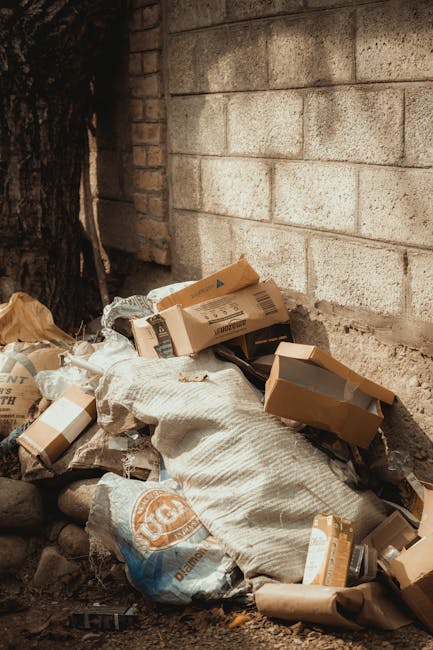
Avoid hidden rubbish removal charges in Downham: a practical guide to clear, honest pricing
If you have ever been quoted one price for rubbish removal and then watched the final bill climb once the team turns up, you are not alone. Hidden costs can be frustrating, especially when you are trying to clear a loft, empty a garage, or just get rid of a pile of awkward waste without drama. This guide on how to avoid hidden rubbish removal charges in Downham breaks the process down in plain English, so you can compare quotes properly, ask the right questions, and book with confidence. No fluff. Just the stuff that saves money and stress.
Downham homeowners, landlords, tenants, and local businesses all face the same basic problem: waste is never as simple as it looks from the pavement. A sofa might be easy. A sofa plus a broken wardrobe, carpet offcuts, and bags from the back of the shed? That changes the picture. The good news is that most surprise charges are avoidable if you understand how pricing is usually built and what a reputable provider should explain before the van arrives.
Why hidden rubbish removal charges in Downham matter
Let's face it: nobody enjoys paying for something they thought was already covered. Hidden rubbish removal charges usually appear when a quote is too vague, the waste description was incomplete, access is harder than expected, or the crew adds extras on site. In a busy area like Downham, where properties range from compact flats to larger family homes and commercial premises, those little unknowns can quickly turn into a surprise invoice.
It matters for more than just your wallet. Unclear pricing can waste time, slow down a clearance project, and create tension on the day. If you are planning a move, a renovation, a bereavement clearance, or a landlord turnaround, the last thing you want is to renegotiate from the driveway while a van idles outside. A clear price lets you plan the job properly and decide whether a full house clearance, a smaller garage clearance, or a simple one-off removal makes the most sense.
There is also a trust issue. A company that explains costs upfront is usually showing you how it works before it gets to your front door. That's a decent signal. Not a guarantee, of course, but a useful one. In our experience, the clearest quotes are usually the calmest jobs.
Expert summary: the easiest way to avoid hidden charges is to compare like-for-like quotes, describe the waste accurately, and confirm what happens if the load size, access, or labour changes on the day.
How hidden rubbish removal charges in Downham works
Most rubbish removal pricing is built from a few moving parts. The core idea is simple: you are paying for the collection, transport, labour, disposal, and sometimes sorting or recycling. The trouble starts when one of those parts is not clearly explained before booking.
Here are the most common pricing components you may see:
- Load volume: many providers price by the amount of space your waste takes in the vehicle.
- Item type: heavier or awkward items may cost more because they need more handling or special disposal.
- Labour time: if waste must be carried from upstairs, out of a loft, or through narrow access, extra labour may apply.
- Access difficulty: long walks, locked gates, stairs, parking restrictions, or no lift can affect the final price.
- Special waste: some materials need separate handling and should be declared in advance.
A transparent company should be able to explain whether the price is fixed, estimated, or based on an on-site assessment. That distinction matters. A fixed quote gives you certainty. An estimate gives you a range, but it should come with clear conditions. If the waste turns out to be different from what was described, a fair provider will explain why the figure changes rather than just dropping a vague "extra charge" into the conversation.
For example, if you book a furniture disposal job and mention only a single armchair, then add a wardrobe, a mattress, and half a shed's worth of bagged waste on arrival, the quote is likely to change. That is not hidden charging. That is a change in scope. The problem is when scope is not discussed clearly before the van sets off.
Key benefits and practical advantages
Keeping rubbish removal pricing transparent is not just about avoiding awkward conversations. It can make the whole job smoother from start to finish. A clear quote changes how you plan, pack, and prioritise the clearance.
- Better budgeting: you know what the job will cost before you commit.
- Less stress on the day: fewer arguments, fewer surprises, fewer phone calls back and forth.
- Faster completion: the team can get on with the job rather than negotiating the basics.
- Cleaner comparison: you can compare providers on service, not just headline price.
- More suitable service choice: you may realise that a full waste removal visit is better value than multiple smaller trips.
There is another benefit that people sometimes overlook: a good quote helps you sort what actually needs removing. Once you start listing items properly, you may notice you can donate, reuse, or store certain things rather than paying to move them. A modest bit of planning can save a surprising amount. Nothing glamorous about it. Still worth doing.
If the clearance is tied to a wider project, this transparency can shape the schedule too. Builders, landlords, shop owners, and offices all benefit from knowing whether a job needs a simple collection or something more structured like builders waste clearance or office clearance.
Who this is for and when it makes sense
This topic matters to anyone who wants straightforward rubbish removal in Downham without paying for avoidable extras. That includes homeowners, renters, letting agents, shop managers, tradespeople, and people clearing out a property after a life change. Truth be told, the biggest risk often comes from jobs that feel simple at first glance.
You will especially want to be careful if your job involves:
- a loft, attic, or top-floor flat
- bulky furniture or broken appliances
- mixed waste rather than a single item
- restricted parking or tricky access
- bagged rubbish stored in a garden, shed, or cellar
- commercial waste from a workplace or retail unit
If you are clearing a compact property, a flat clearance can be very different from clearing a house with a driveway and good access. Likewise, a household tidy-up is a different job from clearing timber, rubble, and site waste after a renovation. The more clearly you match the service to the actual waste, the less likely you are to get hit with a last-minute uplift.
There is also a human side to this. In a bereavement or a sudden move, people often just want the job done respectfully and quietly. In those moments, clear pricing matters even more because it reduces one more source of friction. No one needs a price debate when they are already dealing with enough.
Step-by-step guidance
If you want to keep costs under control, follow a methodical process. It takes a little longer at the start, but it usually saves time later. Here is the most practical way to handle it.
- List everything that needs removing. Be specific. "Old furniture" is too vague. "Two wardrobes, one three-seat sofa, four bin bags, and a broken desk" is much better.
- Take clear photos. Wide shots and close-up pictures help a provider understand the volume and type of waste. If the job includes awkward access, photograph that too.
- Note access details. Stairs, lift availability, parking, narrow hallways, locked gates, or rear-only entry all matter.
- Ask how the quote is calculated. Is it based on volume, item count, labour, or a fixed visit price?
- Ask what is excluded. Some companies include labour and disposal, but exclude certain materials or difficult access.
- Confirm the disposal route. A reputable provider should be able to explain that waste is handled responsibly and in line with local expectations.
- Get the terms in writing. Even a short written summary is better than a vague verbal promise. Email is fine.
- Check the day-of change policy. If the load is larger than expected, what happens? A proper answer should be clear and fair.
If your job is mainly household clutter, it may be worth looking at home clearance or, for a fuller property reset, house clearance. If it is mostly stored bits in the loft, then loft clearance may be the more sensible route. Matching the service to the job is one of the easiest ways to avoid surprise costs.
Expert tips for better results
Here are the small things that make a big difference. Some are obvious once you know them, but not always before.
- Be honest about quantity. Guessing low tends to backfire. It is better to overstate slightly than to understate and renegotiate later.
- Separate reusable items from waste. If a table or chair can be passed on, say so. It may change the best disposal route.
- Ask about weight as well as volume. Heavy waste can cost more than light bulky waste, even if it fills a similar space.
- Check whether labour is included for upstairs removal. Carrying items down several flights is not the same as lifting from the curb.
- Confirm parking assumptions. A van that cannot park close enough can add time and cost.
- Use service pages to narrow the job type. For example, furniture clearance may suit mixed household items better than a broad general quote.
A tiny bit of over-preparation goes a long way. If you are clearing out a garage on a wet Thursday evening, and everything smells a bit damp and dusty, you will appreciate a crew that already knows what they are walking into. Saves everyone a headache.
One more thing: ask whether the quote includes sweeping up the area afterwards. That is not always standard, and if you expect it but do not ask, you can end up disappointed. Not huge, but annoying. Very annoying, actually.
Common mistakes to avoid
Most hidden charges are not "tricks" in the dramatic sense. They usually happen because the customer and provider have different assumptions. Those assumptions are where the trouble lives.
- Accepting a quote without describing all items. Missing even a couple of bulky pieces can change the job size.
- Ignoring access details. It sounds minor, but a basement flat or narrow alleyway can genuinely affect labour time.
- Choosing only on headline price. The cheapest quote often leaves the most room for extras.
- Not asking what is included. Disposal, labour, loading, and travel may not all be bundled.
- Forgetting about specialist waste. Builders' rubble, plasterboard, or mixed renovation waste can be priced differently.
- Leaving everything for the day of collection. Last-minute additions are one of the most common causes of price changes.
A practical example: someone clearing a shed might request a simple garden rubbish pick-up, then add broken fencing, a rusted barbecue, three tyres, and a pile of old tiles. That is no longer a standard tidy-up. It may need a different service and a different quote. If you need something more specific, a garden clearance or a more general waste removal booking may be the better fit.
Tools, resources and recommendations
You do not need fancy tools to keep rubbish removal costs under control. A phone, a notepad, and a bit of honesty are usually enough. Still, a few simple habits make the whole process cleaner.
- Photo folder on your phone: keep all waste images in one place so you can send them quickly.
- Room-by-room list: useful for house and loft clearances, especially if items are scattered.
- Simple checklist: note what stays, what goes, and what may need special handling.
- Written quote request: ask for a short written summary, even if the initial conversation is by phone.
- Terms and quote pages: review the provider's published pricing and quotes information if available, and check the terms and conditions before you commit.
For added peace of mind, it is worth looking at pages that show how a company works behind the scenes, not just what it sells. Their about us page can help you understand how they operate, while their insurance and safety information tells you more about how they manage risk on site. That is not glamorous reading, admittedly, but it is useful. Properly useful.
If your priority is responsible disposal, their recycling and sustainability information may also help you see whether the company sorts and diverts waste carefully rather than sending everything off in one lump.
Law, compliance, standards and best practice
For rubbish removal, the main compliance point is simple: waste should be handled legally and responsibly, with the right duty of care. You do not need to become a legal expert to protect yourself, but it is sensible to use a provider who understands UK waste handling expectations and can explain their process in plain terms.
Here is the practical version. A reputable operator should be able to show that waste is transported and disposed of properly, that materials are sorted where appropriate, and that health and safety are taken seriously. If you are a business owner, landlord, or managing agent, this matters even more because your own obligations may go beyond the immediate collection.
Best practice also includes clear communication about:
- what has been quoted for
- what would trigger a price change
- who is responsible for access
- whether the job includes loading, clearing, and sweeping
- how special or hazardous items are treated
If you are arranging work for a workplace, consider the extra planning needed for business waste removal or an office clearance, because those jobs often involve timing, access, and confidentiality issues on top of the waste itself.
And a quiet but important note: if a company seems unwilling to explain its quote structure, that is often a better warning sign than any shiny sales pitch. You do not need perfect jargon. You do need clarity.
Options, methods and comparison table
Different clearance approaches suit different situations. The right choice depends on how much waste you have, how awkward it is, and how much certainty you want around the final cost.
| Option | Best for | Cost certainty | Risk of hidden charges | Notes |
|---|---|---|---|---|
| Fixed-price removal | Clearly defined jobs with good photos and access details | High | Low | Best when the waste list is accurate and complete |
| Estimated quote | Jobs with some uncertainty or mixed items | Medium | Medium | Works well if the provider explains what may change the price |
| Pay-on-site adjustment | Very variable jobs or short-notice collections | Low to medium | Higher | Only suitable if the adjustment rules are very clear |
| Specialist service by waste type | Furniture, garden, builders, loft, or office clearances | High when matched correctly | Low to medium | Often best value if the job is more specific than general rubbish removal |
The table is not about finding the cheapest-looking option. It is about picking the format that gives you the least chance of a surprise later. Honestly, that is where the real saving tends to be.
Case study or real-world example
A Downham resident wanted to clear a spare room before decorating. The room held two flat-pack wardrobes, several bags of books, an old desk, a mattress, and a stack of broken household bits from the hallway. At first glance, it sounded like a small job. But the access was through a narrow stairwell, parking was limited, and the waste had spread across more than one room.
Instead of sending a vague message saying "need some rubbish gone," they took five photos, listed each item, and mentioned the stairs, parking, and the fact that the mattress had to come down from the first floor. The provider could then quote far more accurately. There was no last-minute scramble, no awkward talk at the door, and the price matched the job. Simple, really.
Now compare that with a different scenario: a customer books a "few bags and a bit of furniture" clearance, but on the day adds an extra pile from the loft, some builder's offcuts, and two large storage cabinets. Even a fair company may need to revise the price because the work has changed. That is exactly the situation this guide is trying to prevent. The best outcome is not just a cheap quote; it is a quote that actually matches reality.
Practical checklist
Use this quick checklist before you book. It takes two minutes and can save you a lot more than that.
- Have I listed every item that needs removing?
- Have I taken clear photos from different angles?
- Have I described access, stairs, parking, and any entry restrictions?
- Do I know whether the quote is fixed or estimated?
- Have I asked what is included in the price?
- Do I know what could increase the cost on the day?
- Have I checked whether any items need specialist handling?
- Have I confirmed whether loading, sweeping, and disposal are included?
- Have I reviewed the provider's payment and security information if I need to pay online or in advance?
- Have I got the quote in writing before booking?
If the answer to any of those is no, pause for a second and tidy that up first. It is a small delay that usually pays for itself.
Conclusion
The simplest way to avoid hidden rubbish removal charges in Downham is to treat the quote as a shared understanding, not just a number. Describe the waste properly, explain access clearly, ask what is included, and get the details in writing. That approach protects your budget and makes the collection day calmer for everyone involved.
Whether you are clearing a single room, a full property, a garden, or a workplace, transparent pricing is what turns a messy job into a manageable one. And if you are still comparing options, the safest next move is to request a clear written quote with no assumptions left hanging in the air.
Get a free quote today and see how much you can save.
At the end of the day, a good rubbish removal service should feel straightforward, not mysterious. That kind of calm is worth quite a lot.
Frequently Asked Questions
What are hidden rubbish removal charges?
They are extra costs that appear after a quote has been given, often because the waste list, access details, or job size was not fully explained at the start.
How do I avoid surprise fees when booking rubbish removal in Downham?
Give a full item list, share photos, mention access issues, and ask whether the quote is fixed or estimated. Written confirmation helps a lot too.
Is a cheaper quote always better?
Not necessarily. A very low quote can leave more room for add-ons. It is usually better to compare what is included rather than chasing the lowest headline price.
Why does access affect the price?
If the team has to carry items down stairs, through tight spaces, or from a long distance to the vehicle, the labour involved increases. That can affect the cost.
Do I need to mention every single item?
Yes, as far as possible. Missing bulky items, heavy waste, or awkward extras can change the job size and lead to a revised quote.
Can furniture or household clutter be priced differently from general waste?
Yes. Different waste types may need different handling, especially if the job includes bulky items, mixed loads, or materials that need separate sorting.
What should be included in a rubbish removal quote?
Ideally, the quote should cover loading, transport, disposal, and any agreed labour. If anything is excluded, it should be clearly stated before booking.
Should I get quotes in writing?
Yes. A written quote or message summary makes it easier to compare providers and helps avoid misunderstandings later.
Is it better to book a general waste removal service or a specific clearance service?
It depends on the job. If your waste is mostly furniture, garden waste, builders' debris, or office items, a more specific service may be a better fit and easier to price clearly.
What if my waste changes after I book?
Tell the provider as soon as possible. If the load gets larger or more complex, a fair company should explain any price adjustment before collection.
How can I tell if a company is trustworthy?
Look for clear explanations, written pricing, sensible questions about access and waste type, and information about insurance, safety, and disposal practices.
What should I do before collection day?
Keep items together if you can, remove anything you want to keep, make access as easy as possible, and double-check that the quote still reflects the actual load.